Buy pillole-per-pene-it.eu ?
We are moving the project
pillole-per-pene-it.eu .
Are you interested in purchasing the domain
pillole-per-pene-it.eu ?
domain@kv-gmbh.de · 0541-91531010
Buy pillole-per-pene-it.eu ?
Why does watt per second times hour equal watt hours?
Watt per second times hour equals watt hours because when you multiply watt per second by hour, the unit of time cancels out, leaving you with watt hours. This is because one hour is equivalent to 3600 seconds, so when you multiply watt per second by hour, you are essentially converting the unit of time from seconds to hours. This conversion allows you to express the energy consumed or produced in terms of watt hours, which is a common unit of energy measurement. **
How is watt measured? 1 W corresponds to 1 watt per second.
Watt is measured by calculating the rate of energy transfer or conversion. It is the amount of energy transferred or converted per unit of time. For example, if a device uses 1 watt of power, it means it is using 1 joule of energy every second. Therefore, 1 W corresponds to 1 watt per second, indicating the rate of energy consumption or production. **
Similar search terms for Watt
Top-Angebote
Products related to Watt:
-
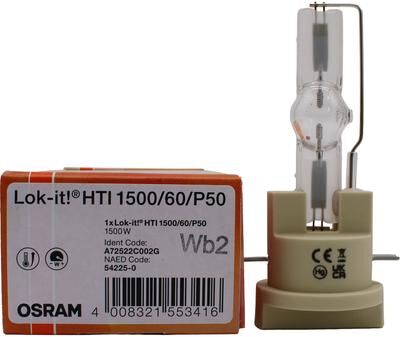
Osram Lok-it!® HTI 1500W/60/P50 1500 Watt 100 Volt Metal Halide Lamp - 54225OSRAM Lok-it!® HTI 1500W/60/P50 Metal Halide Lamp (54225) – 130,000 lm, 6000K High-output single-ended 1500W metal halide lamp—130,000 lumens at 6000K with Ra >85 for professional moving heads and high-intensity stage lighting. Extreme Brightness...273,99 $*Shipping: 0,00 $Secure redirect to the provider
-
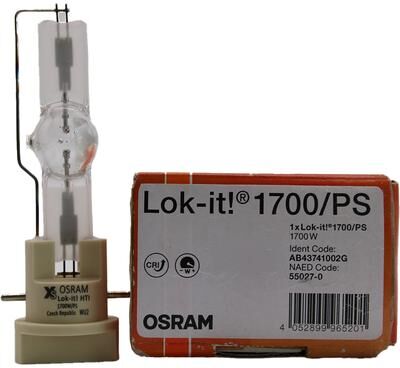
Osram Lok-it!® 1700/PS 1700 Watt 84.5 Volt Metal Halide Moving Head Lamp - 55027OSRAM Lok-it!® 1700/PS Metal Halide Lamp (55027) 1700W high-output moving head lamp with 135,000 lm, 6000K, and CRI Ra >92 High-lumen 1700W Lok-it! lamp engineered for modern moving heads—bright output, crisp 6000K color, and excellent CRI for stage...394,99 $*Shipping: 0,00 $Secure redirect to the provider
-
Osram Lok-it!® HTI 1500W/60/P50 M3W 1500 Watt 100 Volt Metal Halide Lamp - 54396HTI 1500W/60/P50 M3W LOK-IT OSRAM SYLVANIA 54396 1500 Watt 100 Volt Metal Halide Lamp Specifications: Volts 100 Lamp Type Metal Halide Product Class Display/Optic Specialty Product Family HTI Base PGJX50 Primary Application Entertainment And Effect...294,99 $*Shipping: 0,00 $Secure redirect to the provider
-
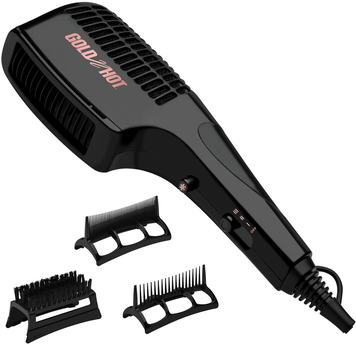
Gold 'N Hot 1875 Watt Styler DryerExperience the convenience of universal styling with the Gold ‘N Hot 1875-Watt combo styler and dryer. Adaptable to a limitless array of hair smoothing, drying, air-brushing, and a myriad of hair quick-fixes, this practical salon tool handles a wide...49,99 $*Shipping: 0,00 $Secure redirect to the provider

-
Can I add watt to watt?
No, you cannot directly add watt to watt because watt is a unit of power, not a physical quantity that can be added together. However, you can add the power outputs of different devices together to find the total power being used in a system. This can be useful for calculating the total power consumption in a circuit or the total power output of multiple devices working together. **
-
How are Ampere, Watt, and Head-Watt related?
Ampere, Watt, and Head-Watt are all units of measurement related to electricity and power. Ampere (A) is the unit of electric current, measuring the rate of flow of electric charge. Watt (W) is the unit of power, measuring the rate at which work is done or energy is transferred. Head-Watt is a unit used in the context of hydraulic power, specifically in the measurement of the power of a pump or turbine. In summary, Ampere measures electric current, Watt measures power, and Head-Watt measures hydraulic power. **
-
What is the difference between watt and watt-hours?
Watt is a unit of power, measuring the rate at which energy is used or produced. It is equivalent to one joule per second. On the other hand, watt-hour is a unit of energy, measuring the amount of energy used over a period of time. It is equivalent to one watt of power used for one hour. In simple terms, watt measures the rate of energy transfer, while watt-hour measures the total amount of energy transferred over a specific period. **
-
What is the difference between watt and RMS watt?
Watt is a unit of power that measures the rate of energy transfer or conversion. It is a measure of the total power output of a device. RMS (Root Mean Square) watt, on the other hand, is a measure of the continuous power output of a device. It takes into account the fluctuating nature of the power output and provides a more accurate representation of the actual power being delivered. In audio systems, RMS watt is often used to measure the continuous power output of speakers or amplifiers, while watt may refer to the peak power output. **


What is the difference between Watt and Watt RMS?
Watt is a unit of power that measures the rate of energy transfer or the rate at which work is done. It is a standard unit used to measure the power of electrical devices. On the other hand, Watt RMS (Root Mean Square) is a measure of the continuous power output of a device, taking into account the fluctuating nature of the electrical signal. It is a more accurate representation of the actual power output of a device, especially for audio equipment like speakers and amplifiers. In summary, while Watt measures the overall power, Watt RMS measures the continuous power output, taking into account the fluctuations in the electrical signal. **
'James Watt Inventions'
James Watt is best known for his invention of the steam engine, which revolutionized industry and transportation during the Industrial Revolution. He also made significant improvements to the design of the steam engine, making it more efficient and practical for a wide range of applications. In addition to his work on steam engines, Watt also invented a number of other devices, including a copying machine and a device for measuring the power of a horse. His inventions played a crucial role in shaping the modern world and are still influential today. **
Top-Angebote
Products related to Watt:
-
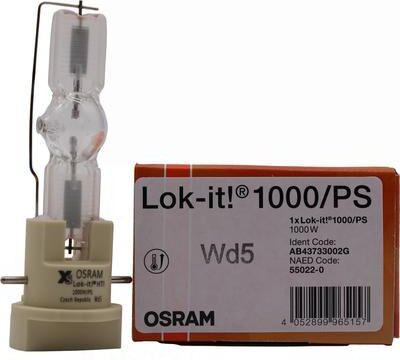
Osram Lok-it!® 1000/PS 1000 Watt 85 Volt Metal Halide Lamp - 55022Osram Lok-it! Power Series 55022 1000W/PS Brilliant Lamp – Stage & Studio 1000W, 92 CRI, 90,000 lumens, 750-hr life—brilliant performance for pro moving heads and spotlights. Extreme Output 1000W, 90,000 lumens for intense stage and studio...228,99 $*Shipping: 0,00 $Secure redirect to the provider
-
Osram Lok-it!® 1400/PS Brilliant 1400 Watt 95.5 Volt Metal Halide Lamp - 55026Lok-it 1400/PS Brilliant Stage Studio Lamp Specifications Rated Life Hours 750 Nominal luminous flux 118000 lm Base PGJX28 Bulb Shape T Color Temperature 6000 Kelvin Volts 95.5 Watts 1400 Product features eXtreme Seal technology for discharge lamps...309,99 $*Shipping: 0,00 $Secure redirect to the provider
-
Osram Lok-it!® HTI 1500W/60/P50 1500 Watt 100 Volt Metal Halide Lamp - 54225OSRAM Lok-it!® HTI 1500W/60/P50 Metal Halide Lamp (54225) – 130,000 lm, 6000K High-output single-ended 1500W metal halide lamp—130,000 lumens at 6000K with Ra >85 for professional moving heads and high-intensity stage lighting. Extreme Brightness...273,99 $*Shipping: 0,00 $Secure redirect to the provider
-
Osram Lok-it!® 1700/PS 1700 Watt 84.5 Volt Metal Halide Moving Head Lamp - 55027OSRAM Lok-it!® 1700/PS Metal Halide Lamp (55027) 1700W high-output moving head lamp with 135,000 lm, 6000K, and CRI Ra >92 High-lumen 1700W Lok-it! lamp engineered for modern moving heads—bright output, crisp 6000K color, and excellent CRI for stage...394,99 $*Shipping: 0,00 $Secure redirect to the provider
-
Why does watt per second times hour equal watt hours?
Watt per second times hour equals watt hours because when you multiply watt per second by hour, the unit of time cancels out, leaving you with watt hours. This is because one hour is equivalent to 3600 seconds, so when you multiply watt per second by hour, you are essentially converting the unit of time from seconds to hours. This conversion allows you to express the energy consumed or produced in terms of watt hours, which is a common unit of energy measurement. **
-
How is watt measured? 1 W corresponds to 1 watt per second.
Watt is measured by calculating the rate of energy transfer or conversion. It is the amount of energy transferred or converted per unit of time. For example, if a device uses 1 watt of power, it means it is using 1 joule of energy every second. Therefore, 1 W corresponds to 1 watt per second, indicating the rate of energy consumption or production. **
-
Can I add watt to watt?
No, you cannot directly add watt to watt because watt is a unit of power, not a physical quantity that can be added together. However, you can add the power outputs of different devices together to find the total power being used in a system. This can be useful for calculating the total power consumption in a circuit or the total power output of multiple devices working together. **
-
How are Ampere, Watt, and Head-Watt related?
Ampere, Watt, and Head-Watt are all units of measurement related to electricity and power. Ampere (A) is the unit of electric current, measuring the rate of flow of electric charge. Watt (W) is the unit of power, measuring the rate at which work is done or energy is transferred. Head-Watt is a unit used in the context of hydraulic power, specifically in the measurement of the power of a pump or turbine. In summary, Ampere measures electric current, Watt measures power, and Head-Watt measures hydraulic power. **
Similar search terms for Watt
-
Osram Lok-it!® HTI 1500W/60/P50 M3W 1500 Watt 100 Volt Metal Halide Lamp - 54396HTI 1500W/60/P50 M3W LOK-IT OSRAM SYLVANIA 54396 1500 Watt 100 Volt Metal Halide Lamp Specifications: Volts 100 Lamp Type Metal Halide Product Class Display/Optic Specialty Product Family HTI Base PGJX50 Primary Application Entertainment And Effect...294,99 $*Shipping: 0,00 $Secure redirect to the provider
-
Gold 'N Hot 1875 Watt Styler DryerExperience the convenience of universal styling with the Gold ‘N Hot 1875-Watt combo styler and dryer. Adaptable to a limitless array of hair smoothing, drying, air-brushing, and a myriad of hair quick-fixes, this practical salon tool handles a wide...49,99 $*Shipping: 0,00 $Secure redirect to the provider
-
Gold 'N Hot 1875 Watt Professional DryerYour hair is your best accessory, but why shouldn't the accessorizing start with your styling tools! The mesmerizing design of the Gold N Hot professional 1875 Watt Euro hair dryer is only a hint of what your lovely tresses will look like after...54,99 $*Shipping: 0,00 $Secure redirect to the provider
-
What is the difference between watt and watt-hours?
Watt is a unit of power, measuring the rate at which energy is used or produced. It is equivalent to one joule per second. On the other hand, watt-hour is a unit of energy, measuring the amount of energy used over a period of time. It is equivalent to one watt of power used for one hour. In simple terms, watt measures the rate of energy transfer, while watt-hour measures the total amount of energy transferred over a specific period. **
-
What is the difference between watt and RMS watt?
Watt is a unit of power that measures the rate of energy transfer or conversion. It is a measure of the total power output of a device. RMS (Root Mean Square) watt, on the other hand, is a measure of the continuous power output of a device. It takes into account the fluctuating nature of the power output and provides a more accurate representation of the actual power being delivered. In audio systems, RMS watt is often used to measure the continuous power output of speakers or amplifiers, while watt may refer to the peak power output. **
-
What is the difference between Watt and Watt RMS?
Watt is a unit of power that measures the rate of energy transfer or the rate at which work is done. It is a standard unit used to measure the power of electrical devices. On the other hand, Watt RMS (Root Mean Square) is a measure of the continuous power output of a device, taking into account the fluctuating nature of the electrical signal. It is a more accurate representation of the actual power output of a device, especially for audio equipment like speakers and amplifiers. In summary, while Watt measures the overall power, Watt RMS measures the continuous power output, taking into account the fluctuations in the electrical signal. **
-
'James Watt Inventions'
James Watt is best known for his invention of the steam engine, which revolutionized industry and transportation during the Industrial Revolution. He also made significant improvements to the design of the steam engine, making it more efficient and practical for a wide range of applications. In addition to his work on steam engines, Watt also invented a number of other devices, including a copying machine and a device for measuring the power of a horse. His inventions played a crucial role in shaping the modern world and are still influential today. **
* All prices are inclusive of VAT and, if applicable, plus shipping costs. The offer information is based on the details provided by the respective shop and is updated through automated processes. Real-time updates do not occur, so deviations can occur in individual cases. ** Note: Parts of this content were created by AI.